Spatial Epidemiology Module

Global Intelligence.
Local Precision.

GeoHealth Karnataka is a revolutionary 3D geospatial platform that maps, tracks, and predicts disease outbreaks by correlating public health data with climate, water, and demographic vectors.
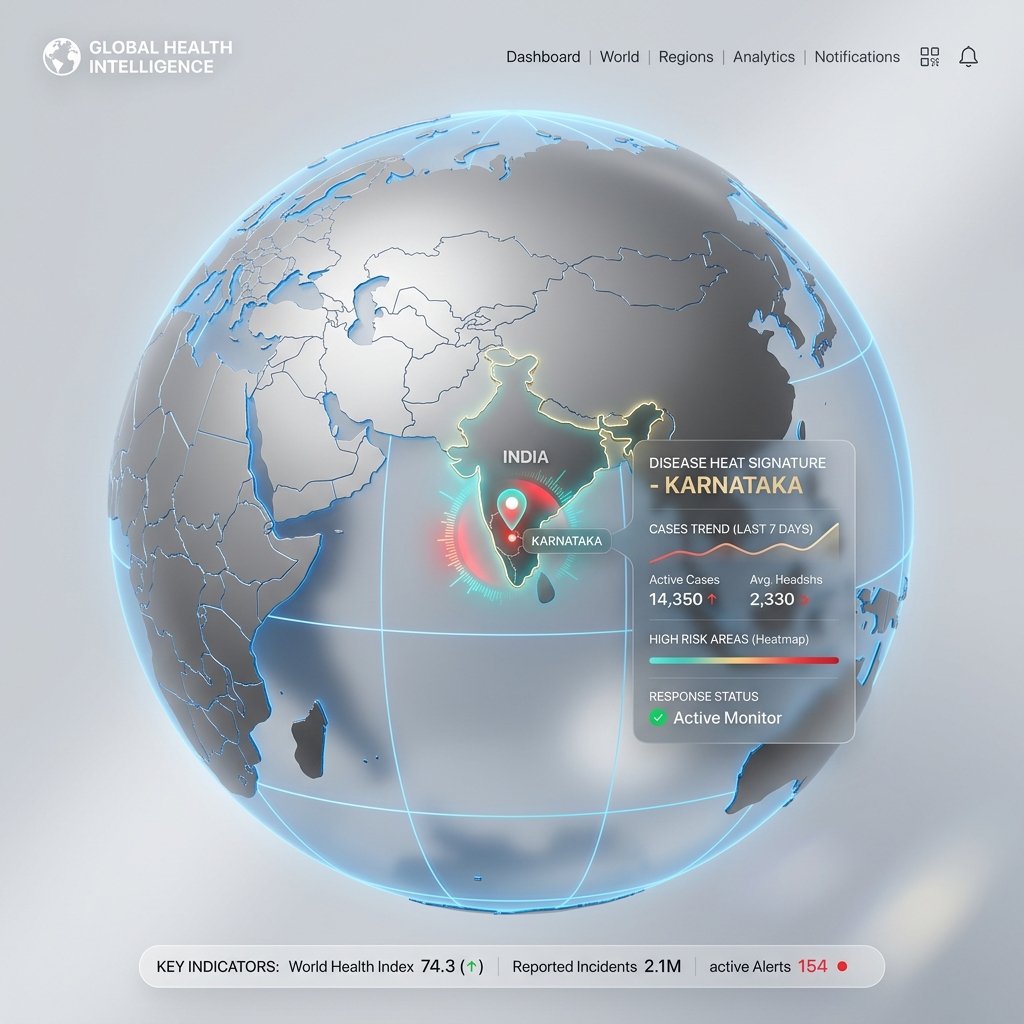
GeoHealth 3D Globe Interface focusing on India and Karnataka
⚠️ The Public Health Blindspot

Disease Doesn't Happen in a Vacuum

Health crises are driven by geography. Malaria breeds in monsoon runoff. Fluorosis stems from Deccan Plateau groundwater. Kyasanur Forest Disease is localized to Western Ghats tick vectors. Without correlating location, climate, and demographics, health systems are reacting to crises instead of predicting them.

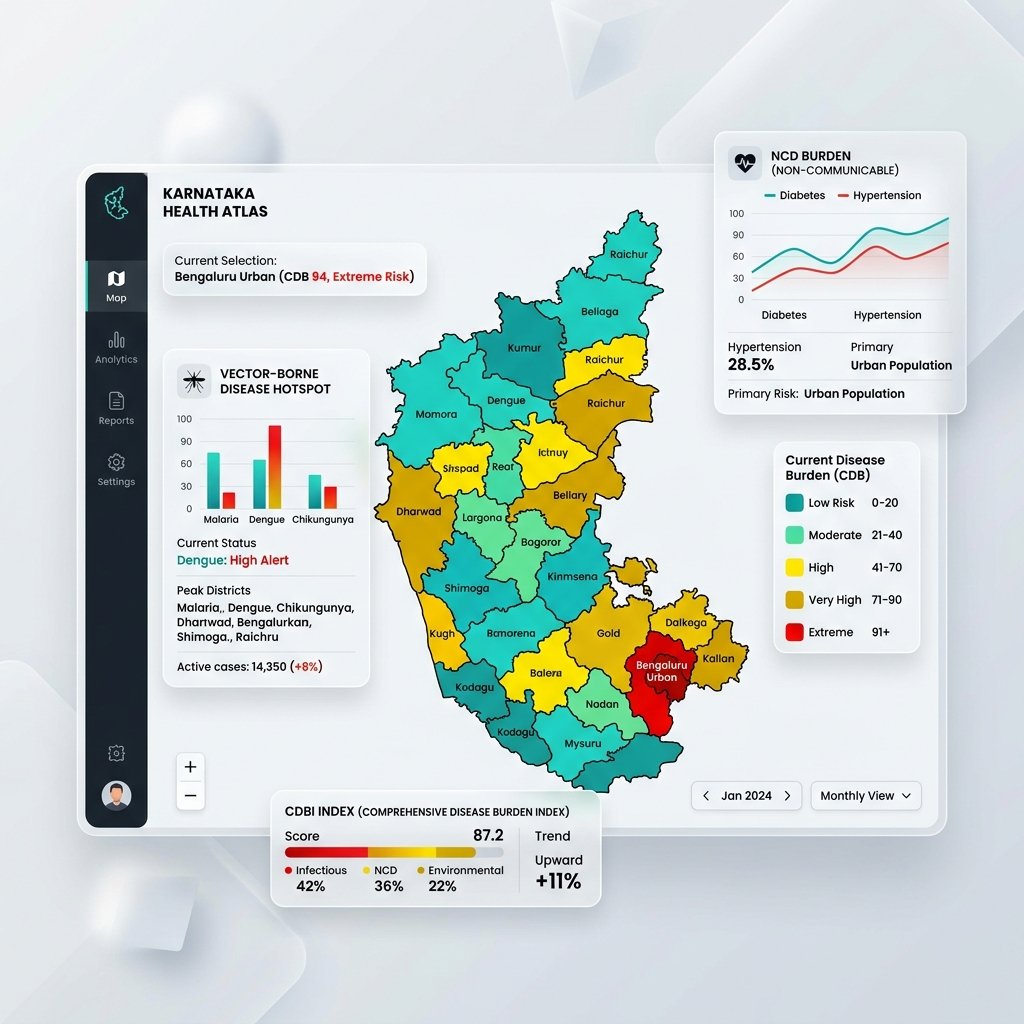
Karnataka Choropleth Heat Map of Disease Burden
Hierarchy Engine

From Globe to District — Instant Clarity

GeoHealth utilizes a seamless drill-down navigation architecture. Users begin at a WebGL 3D Earth globe, zooming directly into Karnataka, revealing a highly detailed 31-district choropleth heat map.

🔴

Composite Disease Burden Index (CDBI)

Districts are colour-coded based on actual surveillance data. Red indicates severe outbreaks requiring immediate intervention.

🗺️

Switchable Risk Overlays

Toggle between Communicable, Non-Communicable (NCD), Vector-Borne, and Water/Soil chemical contamination layers.

Geospatial Profiling

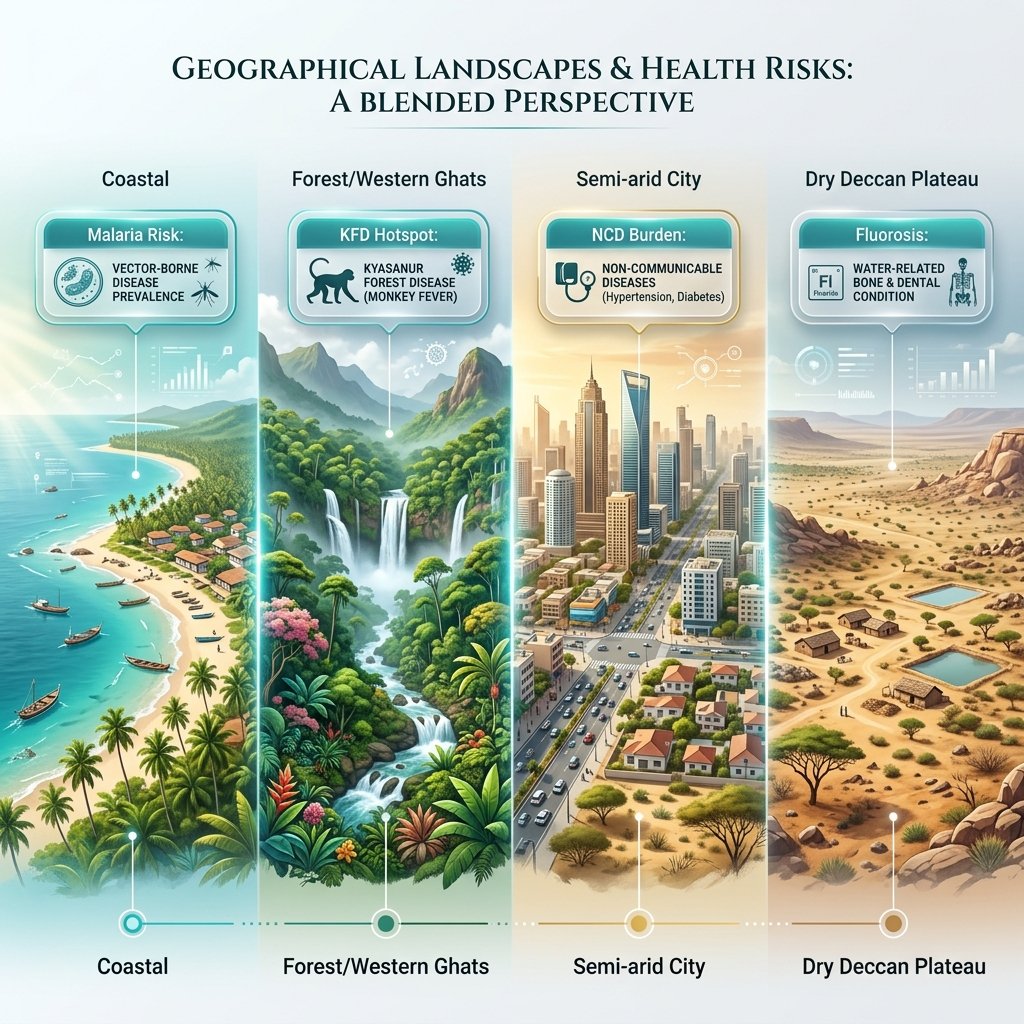
Karnataka's Four Epidemiological Zones

Karnataka's vast geographic diversity requires highly specific health intelligence. We segment the state into four distinct climatic and dietary zones, mapping specific diseases to their environmental triggers.

Infographic showing Coastal, Forest, City, and Deccan Plateau zones

🌊 Coastal Karnataka

Districts: Dakshina Kannada, Udupi, Uttara Kannada

Heavy monsoon environment. High vulnerability to Malaria, Dengue, and Leptospirosis (due to paddy farming exposure).

🌲 Malnad / Western Ghats

Districts: Shivamogga, Chikkamagaluru, Kodagu

Forest terrain. Epicenter of Kyasanur Forest Disease (KFD/Monkey Fever) driven by tick vectors. Monitored via live monkey death alerts.

🏙️ South / Central (Urban)

Districts: Bengaluru, Mysuru, Tumkuru

High urban density. Massive Non-Communicable Disease (NCD) burden including Diabetes, Hypertension, and Road Traffic Injuries (RTI).

🏜️ North (Deccan Plateau)

Districts: Kalaburagi, Raichur, Yadgir, Bidar

Hot, semi-arid terrain. Dental and Skeletal Fluorosis is endemic here due to heavily contaminated groundwater passing WHO limits.

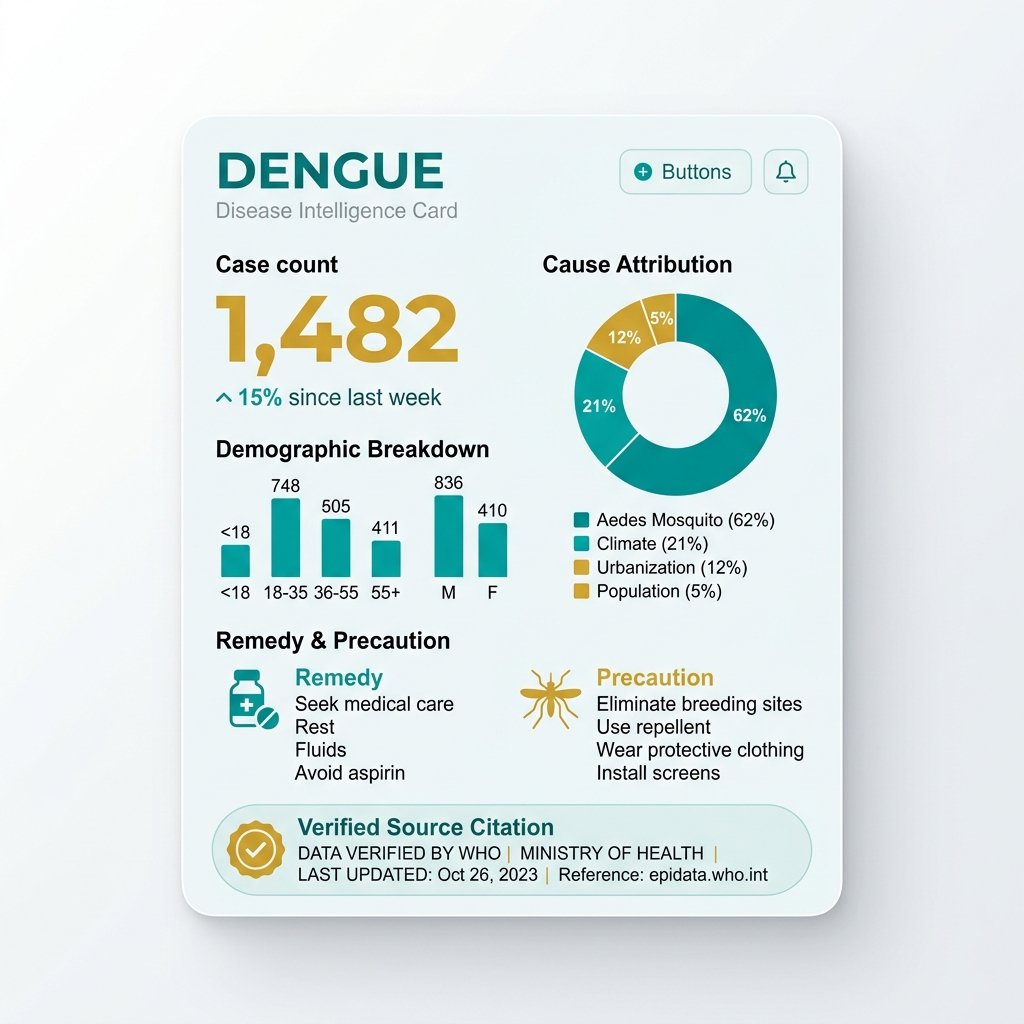
Disease Intelligence Card showing case counts, causes, demographics, and remedies
Core Component

The Disease Intelligence Card (DIC)

Selecting any district generates modular Disease Intelligence Cards. This is the heart of the application, rendering complex epidemiological data into actionable insights for both citizens and health officials.

📊

Demographic Transparency

Every disease tracks exact breakdown by age bands and gender. Notably, the module explicitly tracks Male, Female, and Transgender data parameters to ensure inclusive public health equity.

🛡️

Remedy & Precaution Engine

Every DIC provides evidence-based treatments, prophylactic measures, vaccine availability, and regional dietary recommendations (e.g., Ragi Mudde for diabetic protection in South Karnataka).

🔐 Zero Hallucination. Absolute Data Integrity.

GeoHealth Karnataka operates on a strict "No Hallucination" policy. In AI-driven healthcare, estimated or fabricated data can cost lives. Our system architecture enforces strict epistemological rules:

  • Verified Citations: Every statistic must link to WHO, ICMR, or IDSP surveillance data.
  • Data Gap Principle: If a district lacks data for a disease, the UI displays a "Data Gap — Strengthening Surveillance Needed" warning. It never invents numbers.
  • Explicit Disclaimers: All clinical remedies display severe medical disclaimers urging hospital visits.
  • Real-Time Alerts: Live API feeds from the state IDSP update outbreak pins automatically (e.g., KFD monkey deaths).