India's 1st End-to-End AI Digital Pathology

Redefining Diagnostics with Prana Pathology AI

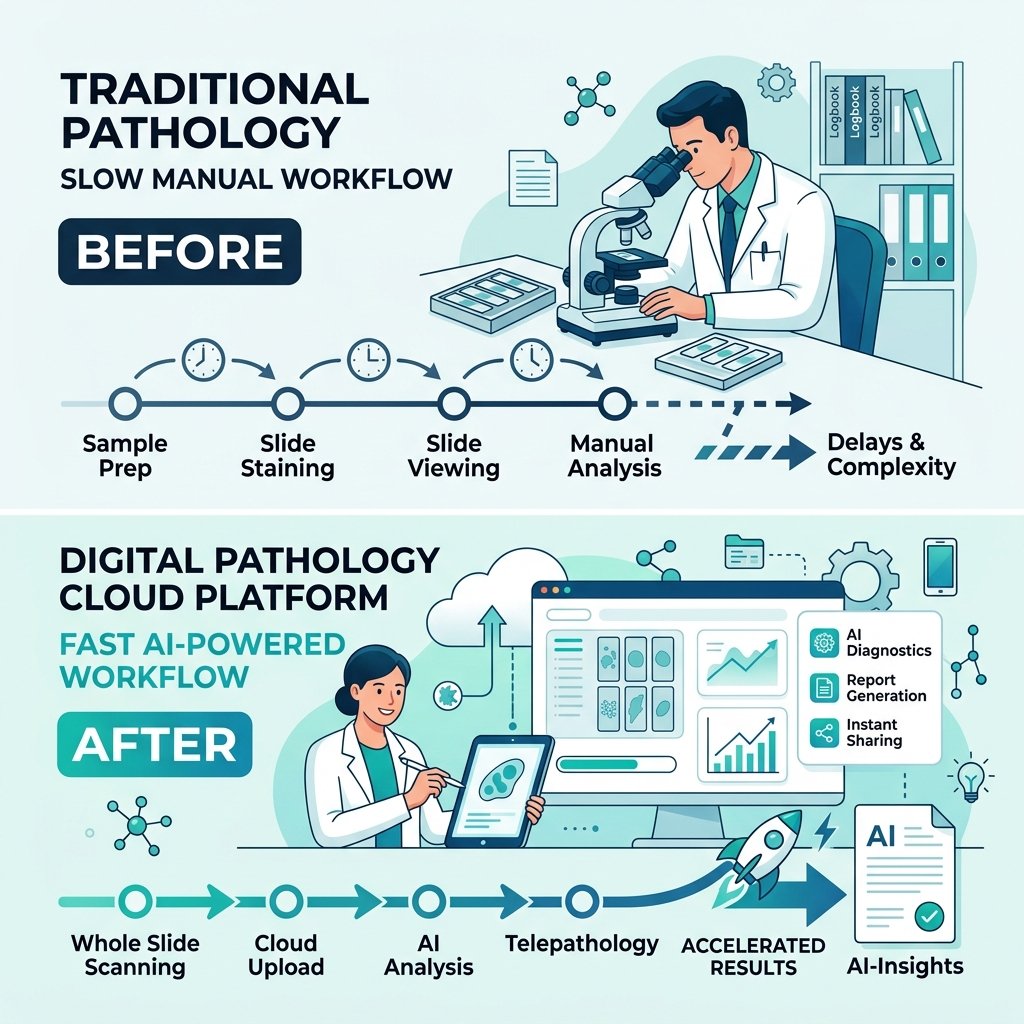
14 disease-specific AI modules. 95%+ sensitivity. <90 second analysis. Replacing the slow, glass-slide-and-microscope model with a fully automated, AI-augmented, cloud-native diagnostic workflow designed specifically for India's 1.4 billion people.

AI-Powered Digital Pathology Platform
PRANA 5-LAYER ARCHITECTURE L1 Hardware / Acquisition Layer WSI scanning • DICOM SR • Prana OEM / KFBIO / Motic L2 Image Processing Pipeline QC • Stain normalisation • Tiling • OpenSlide / PyVips L3 AI Inference Engine 14 modules • PyTorch • ONNX Runtime • TensorRT L4 Clinical Workflow Platform LIS • OHIF Viewer • Reports • Teleconsultation L5 Data & Integration Layer ABDM • HL7 FHIR R4 • Kafka • Elasticsearch • Research HL7 FHIR v4 / DICOM v3.0 Compliant API Gateway
≥ 95%AI Sensitivity Target
< 90sWhole-Slide Analysis
14Disease-Specific Modules
50Concurrent Slides
99.7%Cloud Uptime SLA
15+Scanner Brands Supported
5Indian Languages
Day 1ABDM/ABHA Compliance
🔬 The Pathology Crisis

India's Silent Diagnostic Emergency

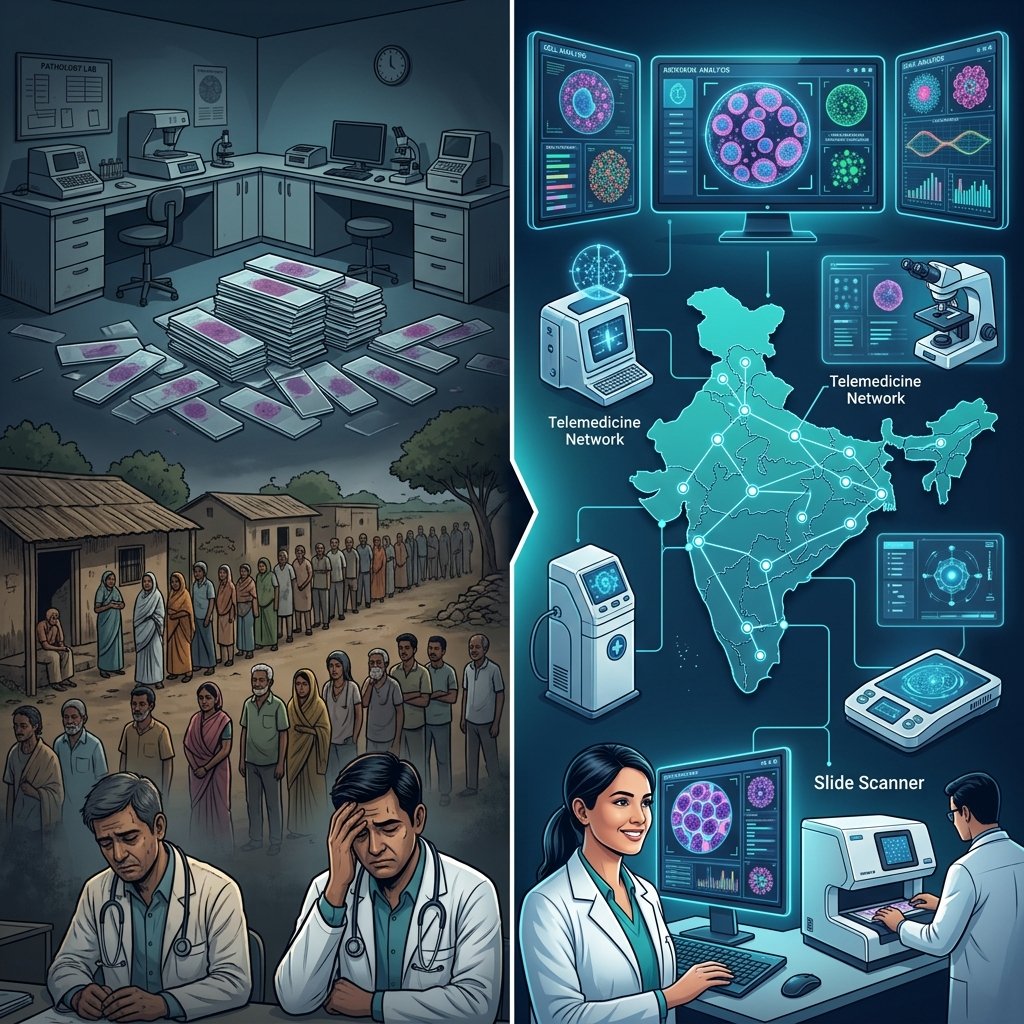
Fewer than 8,000 pathologists serve 1.4 billion people — a ratio 25x worse than global benchmarks. 70% of cancers are detected at advanced stages due to inaccessible pathology.

1:200KPathologist-to-patient ratio in India (WHO recommends 1:10,000)
5-12 DaysTurnaround time in district hospitals vs. 24-48 hrs in private labs
25%Inter-observer disagreement rates on borderline lesions
70%Cancers detected at advanced stages due to delayed pathology
14.6LNew cancer cases reported annually per National Cancer Registry
$124MIndia digital pathology market by 2034 (10.45% CAGR)
India Pathology Crisis vs AI Solution

How Prana AI Solves This

Prana Pathology AI integrates whole-slide imaging (WSI) hardware, fourteen disease-specific AI diagnostic modules, real-time teleconsultation, and an ABDM-compliant LIS — all through dual-mode on-premise and cloud deployment.

  • Rapid Throughput: Analyze WSI in under 90 seconds with 50 concurrent slides
  • Hub-and-Spoke Telepathology: Route cases from Tier 3 districts to Tier 1 specialists instantly
  • Foundation Models: UNI, Virchow2 (3.1M WSIs), CONCH, CHIEF — plus India-specific Prana-IndoPath v1.0
  • India-Exclusive Modules: TB/AFB detection (MOD-14) and Oral Cancer (MOD-11) — no Western equivalent exists

Why Now?

  • ✦ CDSCO SaMD framework released Oct 2025
  • ✦ ABDM mandates accelerating hospital digitisation
  • ✦ India Pathology Dataset (IPD) building national AI training data
  • ✦ 5G + low-cost cloud makes AI pathology viable in Tier 3
  • ✦ MSR Group provides 15 hospitals + 5 medical colleges
Technical Architecture

Five-Layer Integrated Platform

Each layer is independently scalable and communicates through a standardised HL7 FHIR v4 / DICOM v3.0 compliant API gateway.

L1

Hardware / Acquisition

WSI slide scanning & pre-processing via Prana OEM, KFBIO, or Motic scanners. 0.22 μm/pixel at 40x, 60-second scan, 80-slide batch loading.

DICOM SR • OpenWSI API
L2

Image Processing Pipeline

7-stage automated DAG: QC, stain normalisation (Macenko/Vahadane), tissue segmentation, multi-resolution tile extraction.

Python • OpenSlide • PyVips • OpenCV
L3

AI Inference Engine

Multi-module disease detection using Attention-Based MIL. Foundation models (UNI, Virchow2) + task-specific classification heads.

PyTorch • ONNX Runtime • TensorRT
L4

Clinical Workflow Platform

PWA-based LIS, enhanced OHIF Viewer v3, one-click NABL/CAP-aligned reports, teleconsultation with 8 concurrent viewers.

React 18 • Node.js • PostgreSQL • OHIF
L5

Data & Integration Layer

ABDM/ABHA native integration, HIS bridge (Practo, eHospital, HMIS), research analytics, federated learning.

HL7 FHIR R4 • Apache Kafka • Elasticsearch
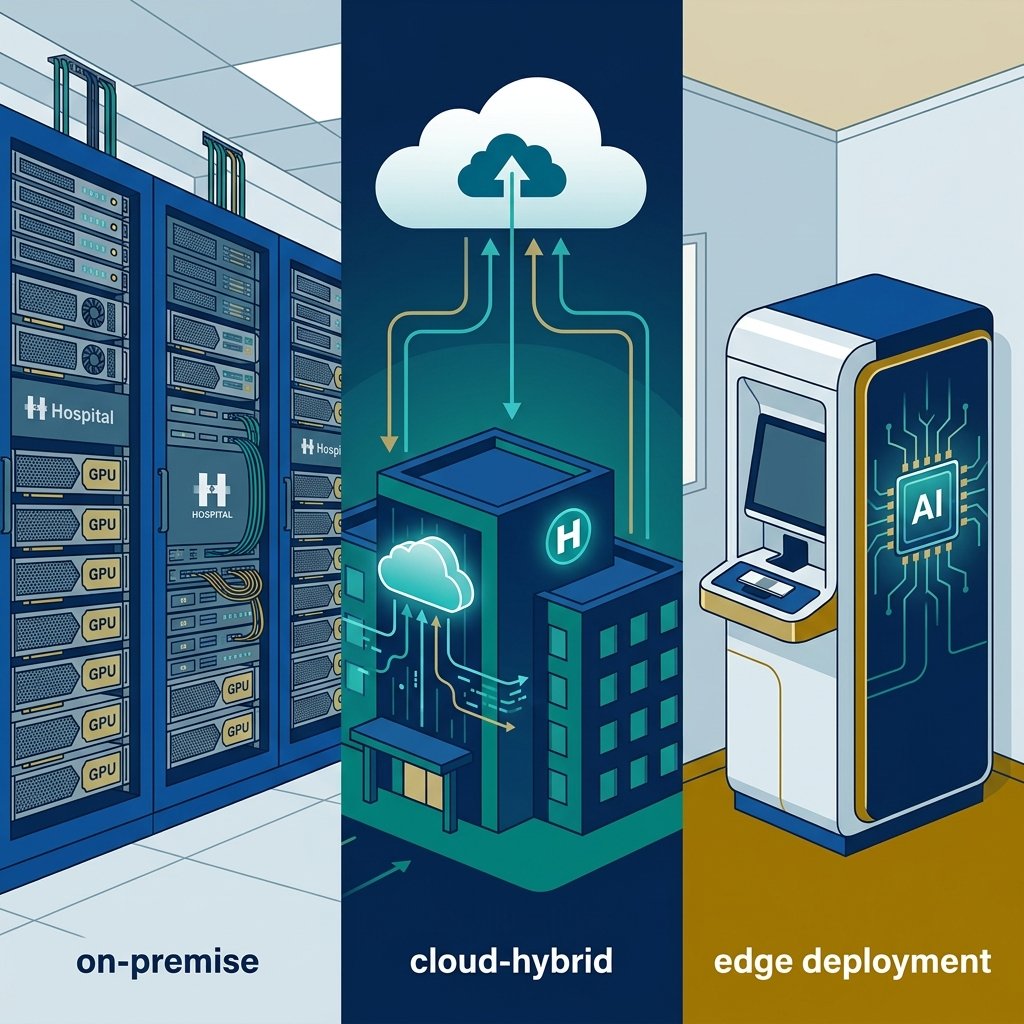
Three Deployment Modes: On-Premise, Cloud-Hybrid, Edge
Deployment Flexibility

Three Deployment Modes

Mode A: On-Premise

For government & large private hospitals requiring full data sovereignty.

  • All processing on hospital-owned servers
  • Air-gapped option for CGHS/defence hospitals
  • 2× NVIDIA RTX 4090, 256 GB RAM, 40 TB NAS
  • WSI scanner LAN-connected, auto-routed to AI

Mode B: Cloud-Hybrid

For Tier 2 clinics & district hospitals. Scanner on-site, AI in cloud.

  • Raw TIFF/SVS uploaded to Prana Cloud (AWS Mumbai)
  • AI report returned in <90 seconds
  • DPDP Act 2023 compliant — Indian data centres
  • Ideal for hub-and-spoke telepathology networks

Mode C: Edge / Pod Clinic

Compact on-device AI for MSR Health AI Pod Clinics. Nurse-operated.

  • NVIDIA Orin NX 16GB, 60W edge AI
  • Automated slide staining + scanning integrated
  • Zero internet required for AI inference
  • Reports to ABHA locker within minutes
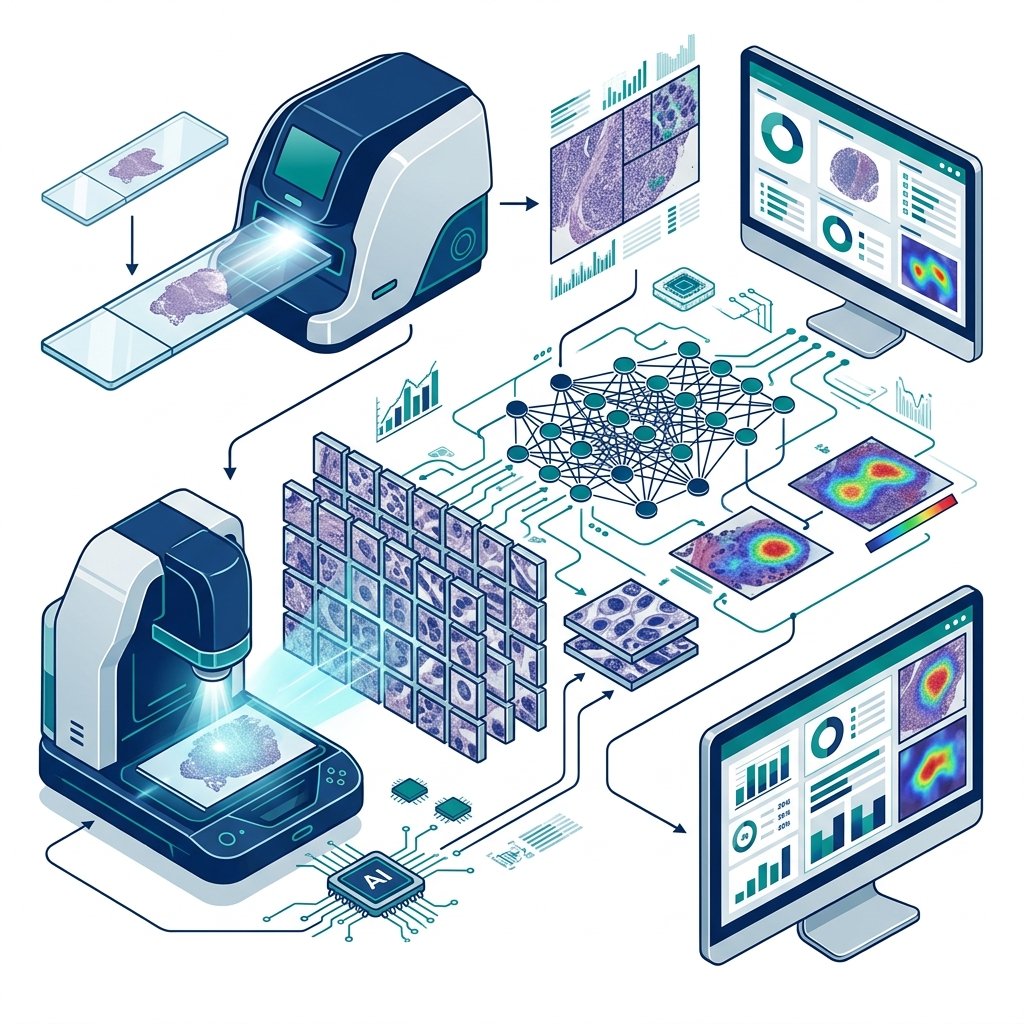
AI Processing Pipeline

7-Stage Automated WSI Pipeline

Every whole-slide image traverses a DAG of microservices orchestrated via Apache Airflow with real-time Kafka event monitoring.

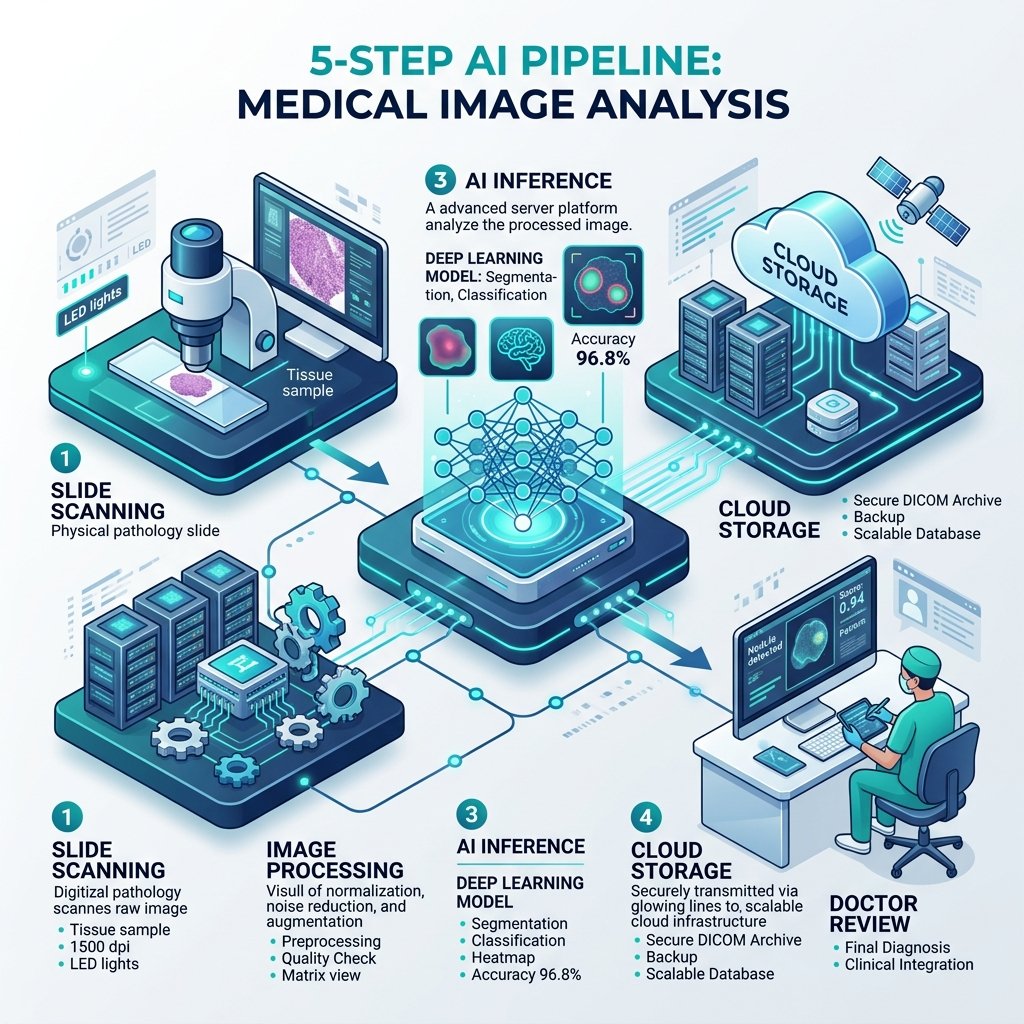
AI Pathology Workflow: Scan to Diagnosis
5-Step AI Pipeline for Medical Image Analysis
S1
Slide Ingestion & DICOM Wrapping

OpenSlide + dcm4che5 converts raw WSI to DICOM WSI objects

→ DICOM WSI in Orthanc PACS
S2
Quality Control (QC)

ResNet-50 classifier detects blur, folds, air bubbles

→ Pass/Fail + defect map
S3
Stain Normalisation

GPU-accelerated Macenko/Vahadane for consistent colour space

→ Normalised H&E tiles
S4
Tissue Segmentation

U-Net tissue vs background model avoids blank tile processing

→ Tissue mask
S5
Tile Extraction

PyVips multi-resolution tiling at 5x, 10x, 20x, 40x

→ 256×256 / 512×512 tiles
S6
Feature Extraction

UNI / Virchow2 foundation models extract high-dimensional embeddings

→ Tile feature vectors
S7
AI Module Inference

Disease-specific attention MIL model classifies entire slide

→ Heatmap + classification + confidence

Foundation Models

UNI — Harvard/MGH

100K+ WSIs, 20+ tissue types. Primary feature extractor for Tier 1 hospitals.

Virchow2 — Microsoft Research

3.1 million WSIs from Memorial Sloan Kettering. EAGLE framework for cloud inference.

CONCH — Harvard/Mahmood Lab

1.17M pathology-language pairs. Report generation NLP alignment.

Prana-IndoPath v1.0 — In-house

India Pathology Dataset (IPD) + MSR slides. India-specific fine-tuning for IHC, TB, H. pylori.

AI Explainability

  • 🔬 Grad-CAM: Gradient-weighted class activation maps highlighting discriminative regions
  • 📊 SHAP: Feature importance report accompanying each structured report
  • 🎯 Attention Overlay: Colour-coded attention scores on WSI viewer
  • ✏️ Pathologist Override: Accept, modify, or reject any AI finding — all logged
India-First Diagnostics

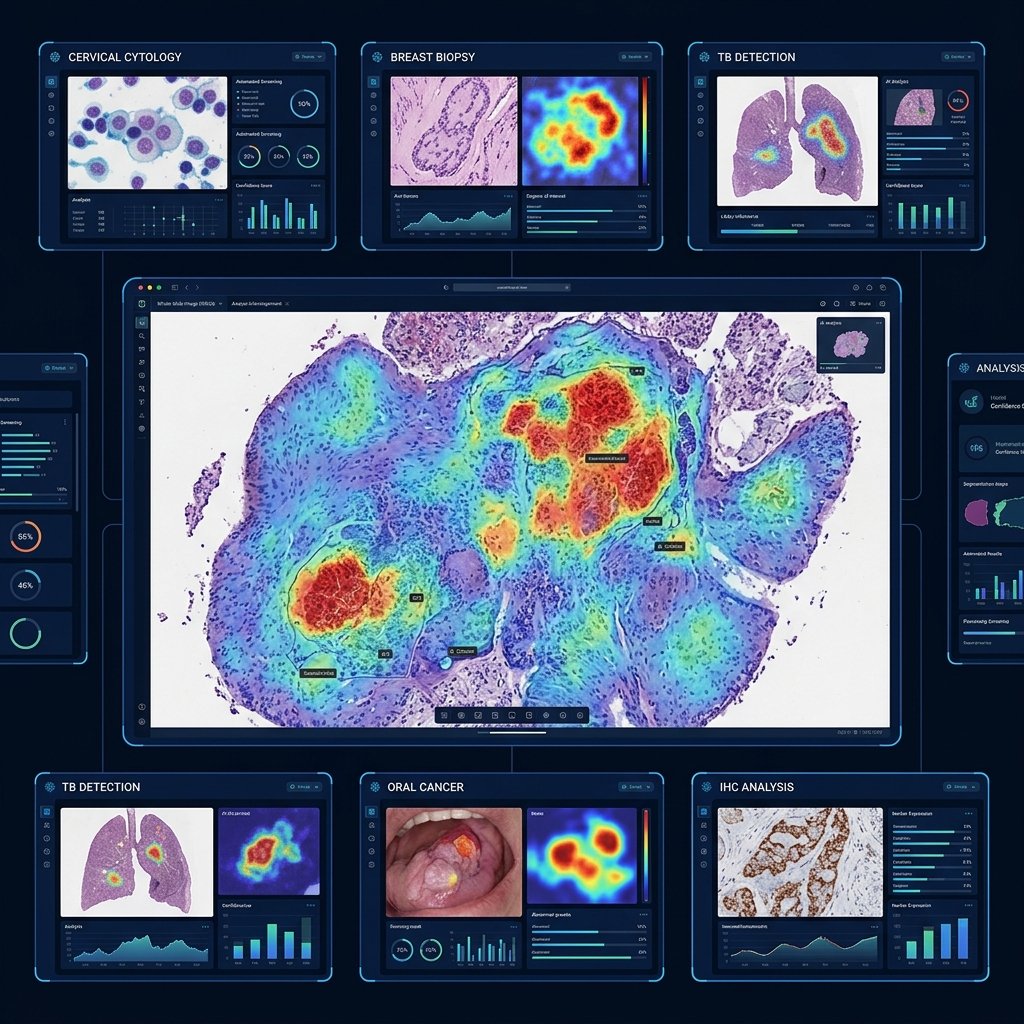
14 Specialized AI Diagnostic Modules

Each module is independently deployable, licensed, and updatable. Modules 11 and 14 are India-exclusive with no equivalent in any global platform.

14 AI Diagnostic Modules - Heatmap Analysis Dashboard
MOD-14 INDIA EXCLUSIVE

TB & Special Stains (ZN/PAS)

RNTCP / WHO TB Pathology
Sensitivity ≥91% | Specificity ≥92%

India contributes 26% of global TB burden. No other commercial platform has this. Automated AFB detection, ZN bacilli counting per field (scanty/1+/2+/3+). Direct Nikshay portal integration.

Stains: ZN, Auramine O, PAS, GMS/Methenamine Silver, Mucicarmine. Training: 85,000 ZN-stained fields + 3,000 slides.
MOD-11 INDIA EXCLUSIVE

Oral & Oropharyngeal Biopsy

WHO H&N Tumour Classification
Sensitivity ≥92% | Specificity ≥87%

India has the world's highest oral cancer burden (tobacco/betel nut). Classifies OSCC, verrucous CA, mucoepidermoid patterns adapted for South Asian oral mucosa morphology.

Types: Normal, fibrosis, OSCC low/high grade, verrucous CA, mucoepidermoid, adenoid cystic
MOD-01

Cervical Cytology (LBC)

TBS/Bethesda Classification
Sensitivity ≥95% | Specificity ≥85%

Cervical cancer is #2 cancer killer in Indian women. YOLOv9 cell detector (180K annotated cells) + EfficientNet-B5 classifier (2.1M cells). 15 cell types classified.

Types: NILM, ASC-US, ASC-H, LSIL, HSIL, SCC, AGC, AIS, Adenocarcinoma + 6 more
MOD-02

Thyroid Cytology (FNA)

Bethesda System (6 Categories)
Sensitivity ≥95% | Specificity ≥90%

High incidence in iodine-deficient Indian population. 6-category classification from non-diagnostic to malignant.

MOD-03

Urine Cytology

Paris System (TPS v2)
Sensitivity ≥95% | Specificity ≥93%

Bladder cancer rising from tobacco and industrial exposure. NHGUC, AUC, SHGUC, HGUC, LGUN classification with atypia flags.

MOD-04

Sputum & BAL Cytology

IASLC / WHO Lung
Sensitivity ≥93% | Specificity ≥88%

India has world's highest TB burden — AI TB flag is critical. Detects malignant cells, atypical squamous, adenocarcinoma clusters, small-cell clusters.

MOD-05

Pleural Fluid & Ascites

ICC Effusion Classification
Sensitivity ≥96% | Specificity ≥90%

Common in advanced cancer + TB. Classifies reactive mesothelial, mesothelioma, metastatic adenocarcinoma, lymphoma, TB clusters.

MOD-06

Gastric Biopsy (H&E)

Revised Sydney System + Vienna
Sensitivity ≥93% | Specificity ≥88%

H. pylori prevalence >60% in India. 8 lesion types including gastritis, intestinal metaplasia, dysplasia grades, and gastric carcinoma types.

MOD-07

Colorectal Biopsy

WHO GI Tumour Classification
Sensitivity ≥94% | Specificity ≥89%

Colorectal cancer rising sharply in urban India. 6 lesion types: normal, IBD, LGD, HGD, adenocarcinoma (tubular/mucinous/signet).

MOD-08

Cervical Biopsy

CIN / WHO Cervix
Sensitivity ≥95% | Specificity ≥88%

Correlates with MOD-01 for combined cervical screening pipeline — unique Prana strength. CIN1-3, HSIL, invasive SCC, adenocarcinoma.

MOD-09

Endometrial Biopsy

FIGO / WHO Endometrium
Sensitivity ≥93% | Specificity ≥87%

Endometrial cancer rising with India's obesity epidemic. Classifies atrophic, proliferative, secretory, hyperplasia, EIN/AH, endometrioid adenocarcinoma.

MOD-10

Breast Core Biopsy

B-Classification (B1-B5)
Sensitivity ≥95% | Specificity ≥91%

#1 female cancer in India. B1-B5 classification, phyllodes, lobular/ductal CA, DCIS, ER/PR/HER2 status flags. Transformative at district hospital level.

MOD-12

Immunohistochemistry (IHC)

CAP / ASCO Guidelines
Concordance >0.94 vs Expert

Replaces manual cell counting. ER, PR, HER2 (0/1+/2+/3+), Ki-67%, PD-L1 (TPS), ALK, ROS1, BRAF, MMR proteins. Enables IHC at Tier 2 hospitals.

MOD-13

Pan-Cancer Lymph Node Metastasis

AJCC Staging
Sensitivity ≥96% | Specificity ≥90%

Critical for accurate staging. Detects micro-metastasis, isolated tumour cells, macro-metastasis. A single missed LN micro-met changes the entire treatment plan.
Ecosystem Integration

Prana PathLIS & ABDM Compliance

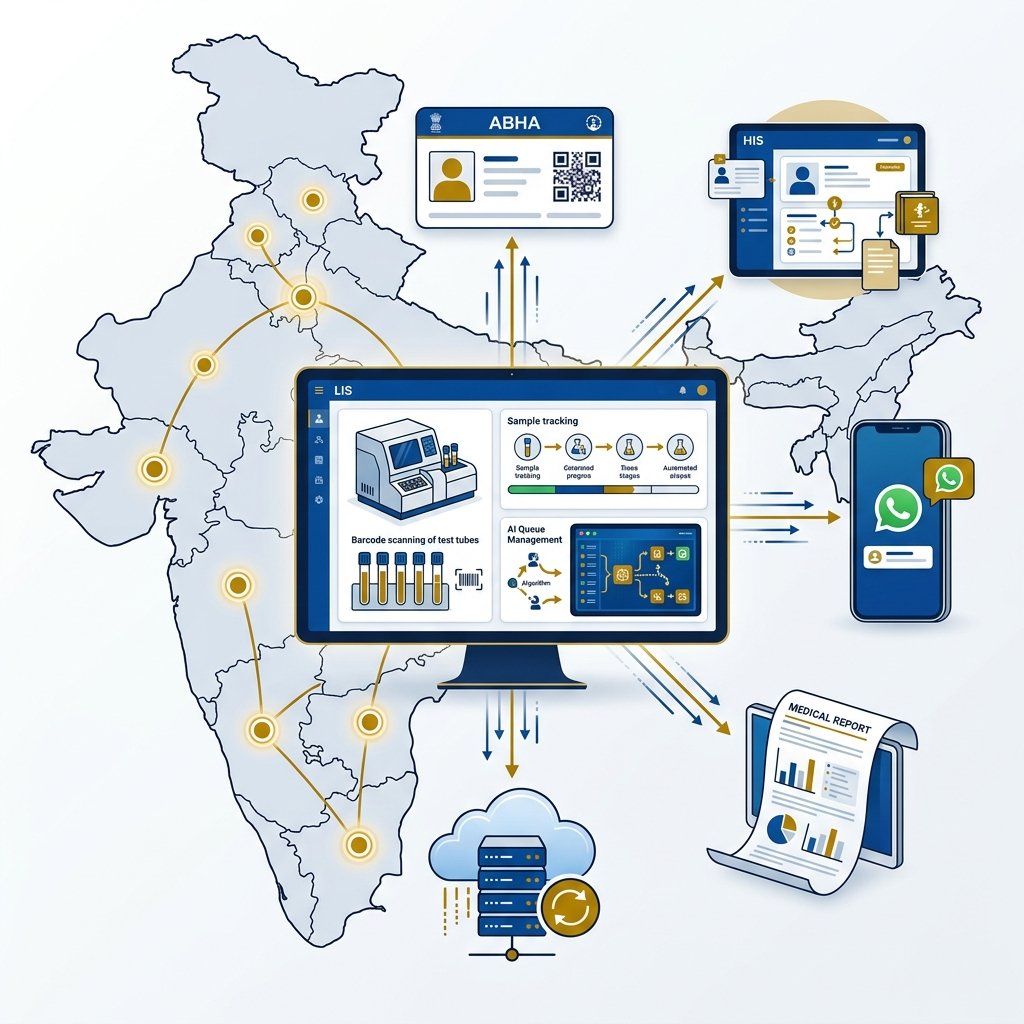
A purpose-built Laboratory Information System with AI-first data models, natively connected to Ayushman Bharat Digital Mission.

PathLIS connected to India ABDM & ABHA Ecosystem
Sample Registration

Barcode/QR printing, accessioning, chain-of-custody, ABHA-linked patient ID

Test Order Management

CPOE integration, standing orders, reflex testing rules (auto IHC if invasive CA)

Slide Tracking

RFID/barcode-tracked physical slide journey from grossing to scanner to archive

AI Queue Management

Priority queue (STAT/routine), SLA tracking, workload balancing across nodes

Report Distribution

HL7 FHIR, email, WhatsApp Business API, print, ABHA locker push

Billing Integration

CGHS, PMJAY/AB-PMJAY, insurance TPA codes auto-tagged to test results

Quality Management

CAP checklists, NABL documentation, proficiency testing, QC dashboards

Archive & Retrieval

Full-text search, slide image search by metadata, WADO-RS from PACS

ABHA Integration

Native ABHA ID field, FHIR DiagnosticReport to HIE-CM, consent manager

Hospital Information System (HIS) Bridge

HIS PlatformIntegrationData Flow
PractoREST API + OAuth2Bidirectional order/result
eHospital (C-DAC)HL7 v2.5 ORM/ORUGovernment hospital connector
HMIS (NIC/MoHFW)ABDM HIE-CM FHIRPublic hospital national system
SAP HealthcareSAP FHIR AdapterLarge private hospital groups
Insta HMSREST APIMid-market private hospitals
Custom HISHL7 v2 + FHIR R4Any HL7-compatible system
Regulatory Compliance

Security, Privacy & Compliance

Security Architecture

  • 🔐 AES-256 encryption at rest for all WSI, reports, patient data
  • 🔒 TLS 1.3 for all API calls; DICOM over TLS for PACS
  • 🪪 OAuth2/OIDC with Aadhaar OTP for pathologist identity
  • 👥 RBAC — 6 roles, 45 granular permissions, MFA mandatory
  • 📋 Immutable audit — tamper-evident Elasticsearch + S3 WORM
  • 🔍 Quarterly pen-test by CERT-In empanelled vendor
  • 🛡️ Snyk + Trivy automated vulnerability scanning
RegulationStatus
CDSCO MDR 2017 + SaMD 2025Filing Q3 2026
DPDP Act 2023✅ Compliant
IT Act 2000 + SPDI Rules✅ Compliant
ABDM HIE-CM Standards✅ Compliant
NABL ISO 15189:2022Roadmap Q4 2026
IEC 62304 / 82304In Progress
ISO 14971:2019 Risk MgmtIn Progress
HL7 FHIR R4✅ Implemented
🇮🇳 Built for India

India-Specific Customisations

Prana is not a Western clone. It is designed ground-up for Indian disease burden, reporting standards, and infrastructure realities.

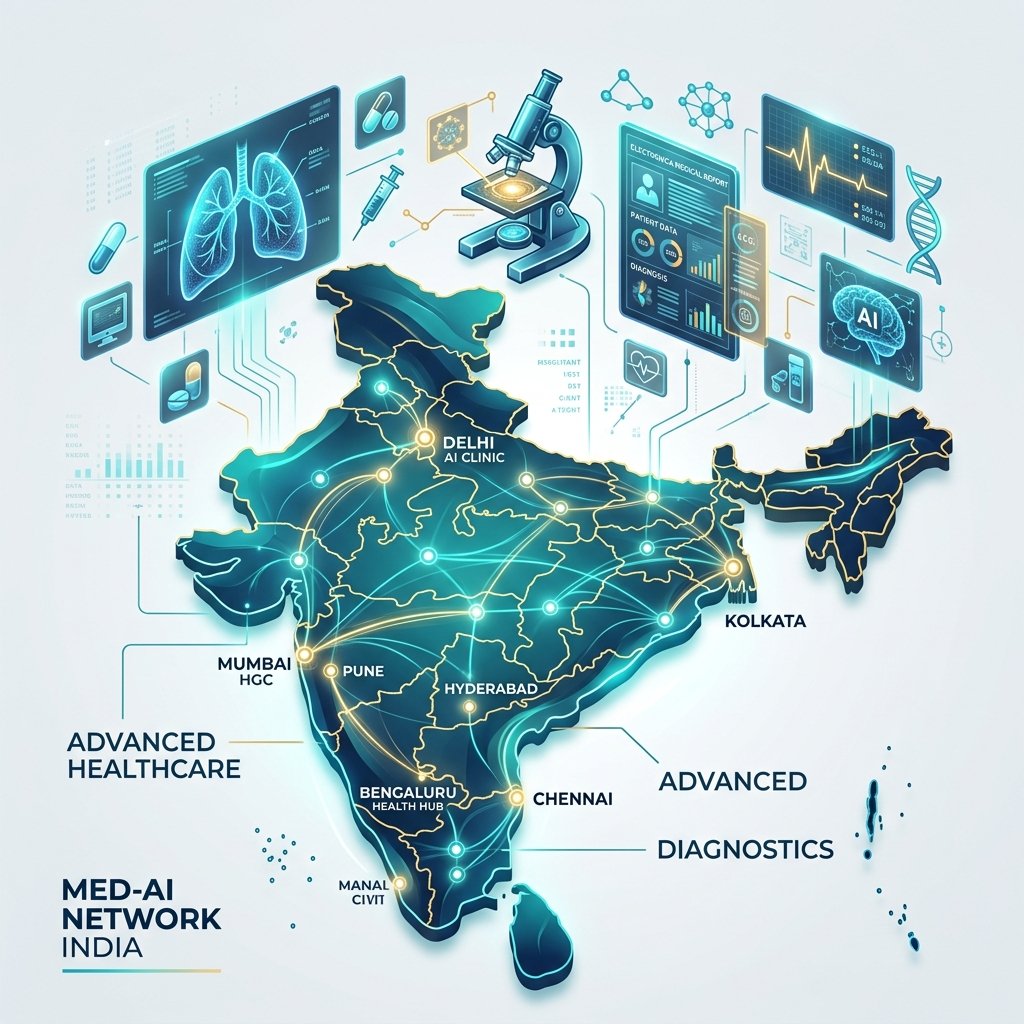
Prana AI Impact Across India - Diagnostic Network
FeatureIndia-Specific Adaptation
TB Module (MOD-14)RNTCP grading, Nikshay portal integration — no Western equivalent
H. pylori ScoringValidated on Indian gastric biopsy atlas (>60% prevalence)
Oral Cancer (MOD-11)Tobacco/betel nut OSCC patterns, South Asian morphology
Reporting LanguageEnglish, Hindi, Kannada, Tamil, Telugu (AI-translated)
Billing CodesCGHS, PMJAY, ROHINI auto-populated
Low-Bandwidth ModeProgressive tile loading, WebP compression for 4G/2G
Power ResilienceOffline-first tile caching, AI queue resumes after outage
Climate AdaptationScanner rated 15-40°C, 85% RH (Indian lab conditions)

India Training Data — Prana-IndoPath v1.0

Generic AI models trained on Western datasets (TCGA, TCIA) show measurable performance drops on Indian tissue samples. Prana-IndoPath is trained on:

IPD — IIIT Hyderabad + NIMSDigitised brain cancer & nephritis slides (Jan 2025)
MSR Archive — 50,000+ slidesPost-ethics committee, de-identified institutional archive
AIIMS Delhi OncologyCollaborative MOU for oncology training slides
Federated LearningHospitals retain data; only model gradients shared
Innovation Core

Prana ResearchHub

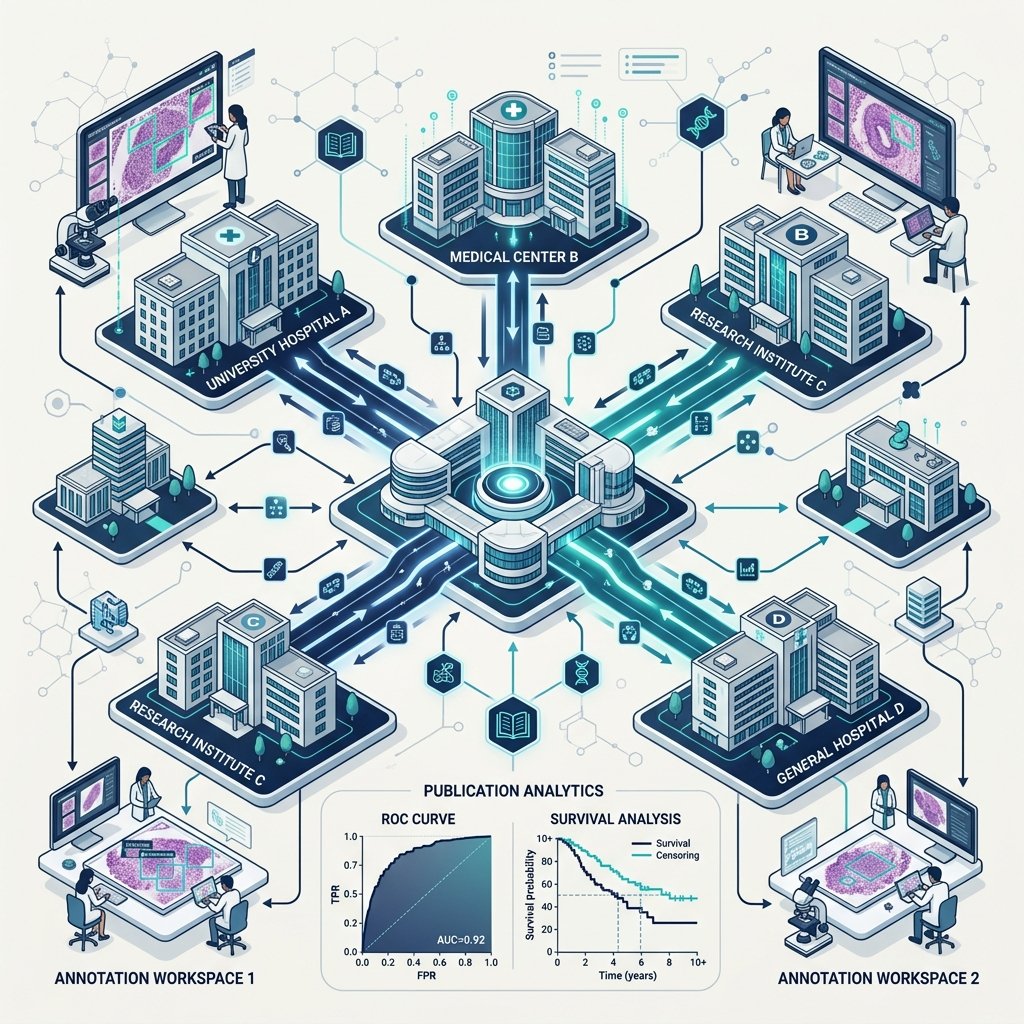
Collaborative research platform for medical institutions, IITs, ICMR labs, and pharmaceutical CROs.

Prana ResearchHub - Federated Learning Collaboration

ResearchHub

Accelerating Biomarker Discovery & Clinical AI Validation

De-Identified Cohorts

k-anonymity (k≥5) compliant cohort builder by diagnosis, institution, demographics

Federated Learning

Multi-centre model training — only gradients shared, never raw slides

Publication Analytics

Survival analysis, ROC/AUC comparisons, exportable to R/Python

Annotation Workspace

Distributed campaigns with Cohen's kappa inter-annotator scoring

Development Timeline

Phase-Wise Build Roadmap

Phase 0: Foundation

Month 1–3

AWS provisioning, DICOM/FHIR framework, scanner drivers (2 brands), QC pipeline, database schema

🏁 Slide ingestion to PACS working E2E

Phase 1: MVP

Month 4–8

MOD-01 (Cervical) + MOD-12 (IHC), PathLIS basic, WSI viewer, report engine, ABHA integration

🏁 First AI-assisted report signed by pathologist

Phase 2: Clinical Expansion

Month 9–14

MOD-02 through MOD-07, Teleconsultation v1, all 10 scanner drivers, mobile app

🏁 Multi-module clinical pilot at MSR (50 cases/day)

Phase 3: India-Exclusive

Month 15–18

MOD-11 (Oral), MOD-14 (TB/ZN), multilingual reports, CGHS/PMJAY billing, CDSCO SaMD filing

🏁 CDSCO Class C application submitted

Phase 4: Research & Scale

Month 19–24

ResearchHub, federated learning, MOD-13, pan-India onboarding, ISO 15189 prep

🏁 100 hospitals live; 10,000 slides/month

Phase 5: Expansion

Month 25–36

Molecular pathology (NGS), Genomics AI (BGI), international SEA version

🏁 Series A; 500 hospitals; ₹10 Cr ARR
Value Proposition

The Prana Advantage

CDSCO & DPDP Compliant

Class C SaMD pathway. All data localised within India. Algorithm Change Protocol from Day 1.

Flexible Deployment

On-premise, cloud-hybrid, or edge pod clinic. Works air-gapped or with 2G connectivity.

Low Bandwidth Resilient

Progressive tile loading, WebP compression, INT8 quantised edge AI at 60W power.

State-of-Art AI

UNI + Virchow2 foundation models with India-specific fine-tuning on 50,000+ MSR slides.

15+ Scanner Support

OpenWSI Abstraction Layer: Philips, Zeiss, Leica, Roche, 3DHISTECH, Hamamatsu & more.

India-Exclusive Modules

TB/AFB (MOD-14) and Oral Cancer (MOD-11) — no other global platform has these.

Revenue Architecture

Revenue Streams

Per-Slide AI Analysis
Pay-per-use
₹150–400 / slide

Volume discounts for hospitals >500 slides/day

Annual SaaS Licence
Subscription
₹12–25L / year

PathLIS + viewer + report engine included

On-Premise Perpetual
One-time + 18% AMC
₹60–90L upfront

Government hospitals / CGHS procurement

Scanner Hardware
OEM Sales
₹18–28L / unit

15% margin on Prana Compact Scanner

Teleconsultation Fee
Revenue Share
15% platform fee

Hub 70%, Platform 15%, Spoke 15%

ResearchHub API
Compute + Data
₹8–20L / year

Pharma CRO and academic research clients

Ready to Transform Pathology?

Deploy Prana AI Pathology in your hospital network. Cut diagnostic turnaround by 90% while improving precision to 95%+.

Request Platform Demo Return to Home